Ask five different haulers "how much does a dumpster cost in Lowell?" and you will likely get five different answers, because the honest answer was never a single number. It is a formula. Container size, how much your debris weighs, how many days you keep the roll-off on site, whether your street requires a permit, and what actually ends up inside the box all move the final price up or down. Understanding those levers matters more than memorizing a price chart, because it is what lets you tell a fair, flat-rate quote apart from a bill that arrives full of surprise line items after the container is already gone.
This guide walks through what genuinely drives dumpster rental pricing for homeowners and contractors around Lowell, Massachusetts, why Middlesex County disposal realities matter more than most renters realize, and what questions to ask so the number you're quoted is the number you actually pay.
The Real Cost Factors Behind Every Lowell Dumpster Quote
1. Dumpster Size
Size is the most obvious lever, and it is a real one. A compact 10-yard dumpster costs less to deliver and haul than a 30-yard dumpster for a simple reason: bigger containers require larger trucks, more fuel, and more landfill or transfer-station capacity per load. The mistake most renters make isn't picking the wrong size out of ignorance — it's guessing low to save money and then paying for a second pickup, or guessing high and paying for volume they never fill. If you're not sure where your project lands, our dumpster size guide breaks down what fits in each container by project type, and our post on what size dumpster you actually need walks through real Lowell scenarios, from a single-room gut job to a full mill-building cleanout.
2. Weight and Tonnage
This is the factor most first-time renters underestimate, and it's the one that causes the most billing surprises. Every roll-off comes with a weight allowance built into its rental — a certain number of tons included before overage charges kick in. Volume and weight are not the same thing. A 20-yard container full of bulky, lightweight furniture and cardboard might weigh a fraction of what a 10-yard container of wet shingles, concrete, or dirt weighs. Dense debris — roofing material, brick, tile, soil, drywall — pushes weight up fast, which is why a job that looks small in cubic yards can still run into overage fees if the material is heavy. Asking your hauler what the included tonnage is, and what happens per ton over that line, is one of the single most useful questions you can ask before booking.
3. Rental Length
Most dumpster rentals include a set number of days on-site as part of the base price, typically built around a normal weekend or week-long project. Keep the container longer — because a demo ran behind schedule, or because you're doing a slow-and-steady garage cleanout — and most haulers charge a daily extension rate. This is where a same-day rental for a fast job can actually work out cheaper than a container that sits half-full in a driveway for two extra weeks. If your timeline is genuinely unpredictable, ask upfront what the daily extension rate is and whether there's flexibility to swap plans mid-rental rather than paying penalty fees.
4. Permit Needs
Where the dumpster sits changes the cost equation too. A container placed entirely on private property — a driveway, a yard, a private lot — typically needs no city permit at all. Placing it on a public street, however, generally requires a street-obstruction or right-of-way permit through the City of Lowell, and that permit is a real cost on top of the rental itself, plus it adds lead time you need to plan around. Skipping this step isn't a shortcut — an unpermitted dumpster sitting in the street is a genuine liability and can result in fines or a forced relocation mid-project. Our Lowell dumpster permit and street placement guide covers exactly when a permit is required and how far ahead to apply. If there's any question about whether your placement will need one, ask before you book, not after the truck shows up.
5. Prohibited-Item Surcharges
Every dumpster rental comes with a list of items that either aren't allowed in a standard roll-off or require special handling: tires, batteries, paint and other liquids, refrigerants-containing appliances, and certain electronics generally fall outside standard debris. Massachusetts also has its own layer on top of general hauling rules — mattresses, box springs, and textiles were added to the state's banned-disposal list in November 2022, alongside longer-standing bans on items like whole tires and construction & demolition debris that hasn't been properly sorted. Loading a banned item into a general dumpster without flagging it upfront is one of the most common ways a straightforward rental turns into an unexpected surcharge, because the hauler discovers it at the disposal facility, not at your curb. Flagging anything unusual — mattresses, appliances, tires, paint cans — when you book is the simplest way to avoid it becoming a line-item surprise later.
A Realistic Way to Think About Price, Without a Fake Price Sheet
You'll see plenty of websites publish a neat little price table — "10-yard: this much, 20-yard: that much" — as if pricing were fixed and universal. In reality, legitimate dumpster pricing is quoted per project because it depends on live variables: current disposal rates at the facility your hauler uses, your specific address and drive distance, the debris type you're disposing of, and the rental length you need. A number posted on a website months or years ago tells you very little about what a container costs today. The more useful mental model is the one above: start from size, then adjust up for expected weight, longer rental windows, street permits, and any items that need special handling. A hauler who can walk you through those factors on the phone, rather than just quoting a flat number with no explanation, is generally the one giving you an accurate figure rather than a lowball number designed to get the truck in your driveway.
Flat-Rate vs. Hidden-Fee Pricing: What to Ask Before You Book
The single biggest difference between dumpster rental companies isn't usually the base price — it's what that base price actually includes. A true flat-rate quote bundles delivery, pickup, a set rental period, and a defined weight allowance into one number, with clear, disclosed rates for anything beyond that. A hidden-fee structure quotes a low number up front and then layers on separate charges for delivery, fuel, "environmental" fees, or weight that should have been disclosed at booking. The table below shows what to compare line by line when you're evaluating two quotes.
When you're comparing two quotes and one is noticeably lower, this table is where the real difference usually shows up. A lower headline number that turns into a higher final bill isn't actually cheaper — it's just cheaper to advertise. Asking a hauler to walk through each of these rows before you book takes five minutes and tells you almost everything you need to know about how they do business.
Middlesex County and Massachusetts Disposal-Fee Context
Part of why dumpster pricing varies by hauler and by town comes down to something outside any company's control: disposal costs. Lowell sits in Middlesex County, and like the rest of Massachusetts, waste and construction debris ultimately has to go through a permitted transfer station or disposal facility — you can see the state's list of licensed solid waste facilities to get a sense of how that network works. Those facilities set their own tipping fees based on material type and volume, and those fees move with market conditions, so they are simply not something any hauler can fix in a static, published price forever.
Massachusetts also layers state-level rules on top of ordinary disposal costs through MassDEP's waste disposal ban list, which restricts what can go into standard trash and construction-debris loads — metal, wood, yard waste, and, since November 2022, mattresses, box springs, and textiles are all on that list. A hauler working legally in Middlesex County has to route banned materials to the right recycling or recovery stream instead of a general landfill load, and that sorting has a real cost that gets reflected in pricing for jobs heavy on those specific materials. Our Middlesex County landfill and recycling guide goes deeper on where different debris types actually end up locally.
If your project involves any digging — a fence post, a shed footing, landscaping — Massachusetts law separately requires calling 811 through Dig Safe System, Inc. before you break ground, regardless of dumpster costs. It's a free call, it's the law, and it protects you from a genuinely expensive mistake that has nothing to do with your roll-off rental.
How LWL Prices Dumpster Rentals in Lowell
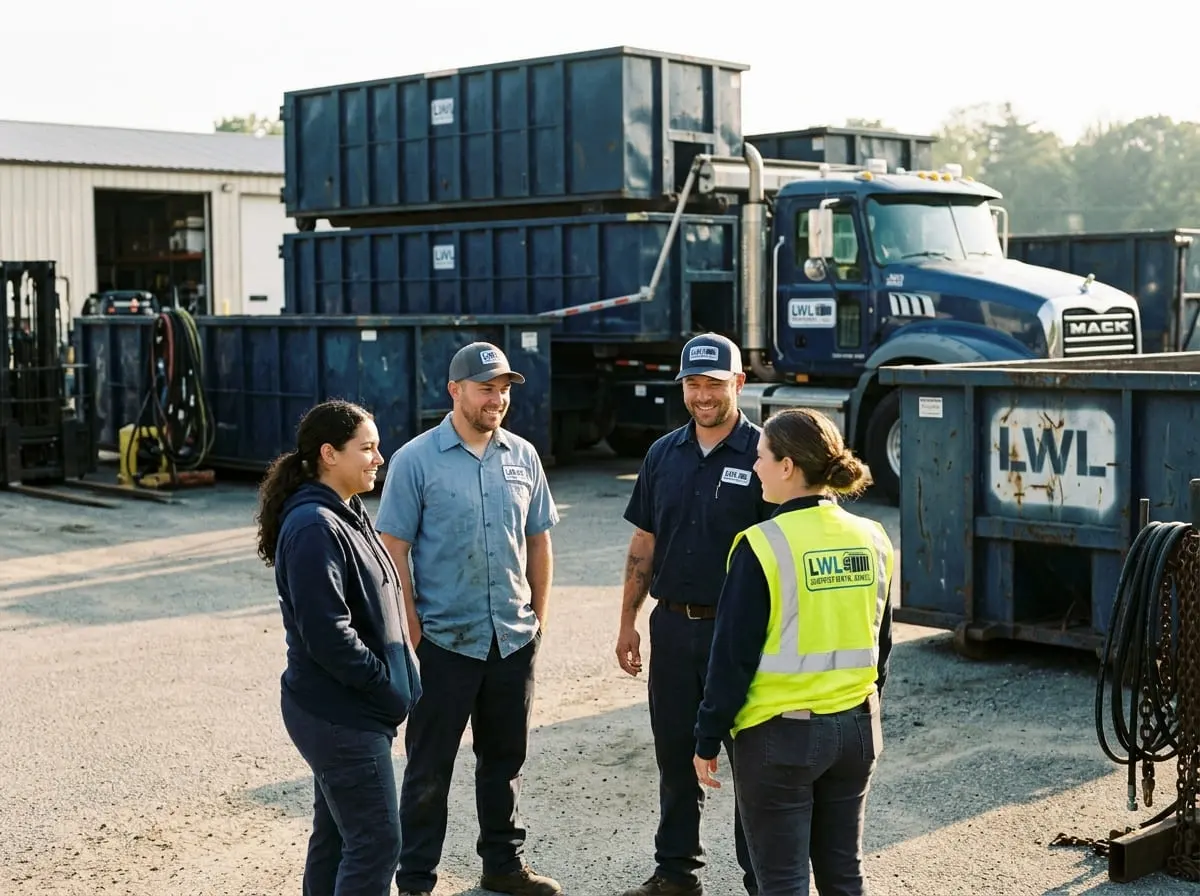
We built LWL around the same complaint our owner, Michael Davis, kept hearing from Lowell homeowners and contractors before he ever bought his first truck: late deliveries, hidden fees, and confusing terms. That's why every quote we give over the phone walks through size, expected weight, rental length, and whether your placement needs a city permit before we ever commit a number — not after. If your project needs heavier-duty capacity, our roll-off dumpster service page covers what's included for construction, renovation, and cleanout work across Greater Lowell.
Getting an Accurate Quote for Your Project
The fastest way to get a number you can actually rely on is to describe your project honestly when you call: what you're clearing out, roughly how much of it there is, whether it includes anything heavy like shingles, concrete, or dirt, how many days you'll need the container, and where on your property it will sit. A hauler who asks those questions back is pricing your job correctly. One who just quotes a flat number with no follow-up questions is guessing — and you'll likely find out which one it was when the final invoice arrives.
Have a project in Lowell or the surrounding towns and want a straight answer on cost factors before you commit? Contact LWL Dumpster Rental and we'll walk through your specific job over the phone.