Why Disposal Rules Matter Before You Fill a Dumpster
Renting a roll-off dumpster in Lowell looks simple from the curb: a container shows up, you fill it, it gets hauled away. What happens after pickup is where Massachusetts state law gets involved. The Massachusetts Department of Environmental Protection, better known as MassDEP, maintains a Waste Ban list that legally prohibits certain materials from going into any landfill or combustion facility in the state — and by extension, from riding in a dumpster that's headed to one. Haulers who ignore the list risk fines from the state; homeowners and contractors who fill a container with banned material risk a rejected load, a surcharge, or a delayed pickup mid-project.
This guide breaks down what the MassDEP Waste Ban list actually covers, what it means in practice for a dumpster sitting in a driveway in Belvidere or on a jobsite in the Highlands, and how Middlesex County's recycling infrastructure fits into the picture. None of this is unique to LWL Dumpster Rental — it's state law, and it applies to every hauler and every household in Lowell and the surrounding Merrimack Valley towns. Knowing it before delivery day is the difference between a smooth residential cleanout and a container that comes back with a rejection tag on it.
What the MassDEP Waste Ban Actually Is
Massachusetts has restricted certain materials from landfill disposal since 1990, and the list has grown steadily since then as the state has run out of in-state landfill capacity and pushed harder on recycling and diversion. The logic is straightforward: some materials are cheap and easy to recycle (cardboard, scrap metal), some are hazardous if landfilled (batteries, CRTs), and some take up disproportionate volume relative to their value (yard waste, wood). Banning them from disposal forces that material into recycling, reuse, or composting streams instead.
The waste ban is enforced primarily at the transfer station and landfill level — facilities are required to inspect incoming loads and can refuse or surcharge loads containing banned material in volume. That enforcement pressure rolls downhill to haulers, and from haulers to customers. It's why a reputable dumpster company will tell you upfront what can't go in the box, rather than let you find out when a load gets rejected at the facility.
The Current MassDEP Waste Ban List
The list below reflects MassDEP's current waste disposal bans. The most recent addition — mattresses, box springs, and textiles — took effect November 1, 2022, and it's the one that trips up the most first-time renters, since none of those items look obviously "hazardous" the way a battery or a CRT does.
A few of these — asphalt, brick, concrete, metal, and wood — are also the exact materials that make up most construction and demolition debris loads, which is why Massachusetts treats mixed C&D loads as their own regulatory category rather than lumping them in with household trash.
What This Means for Your Rented Dumpster
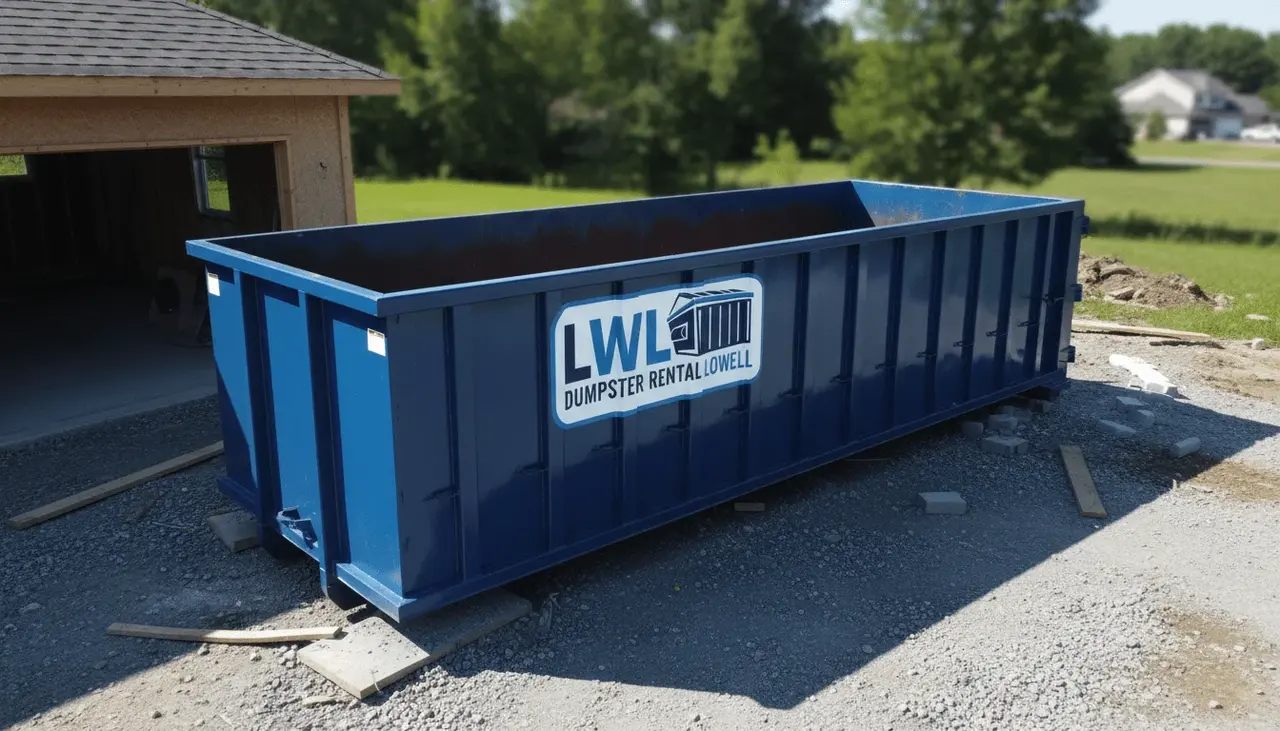
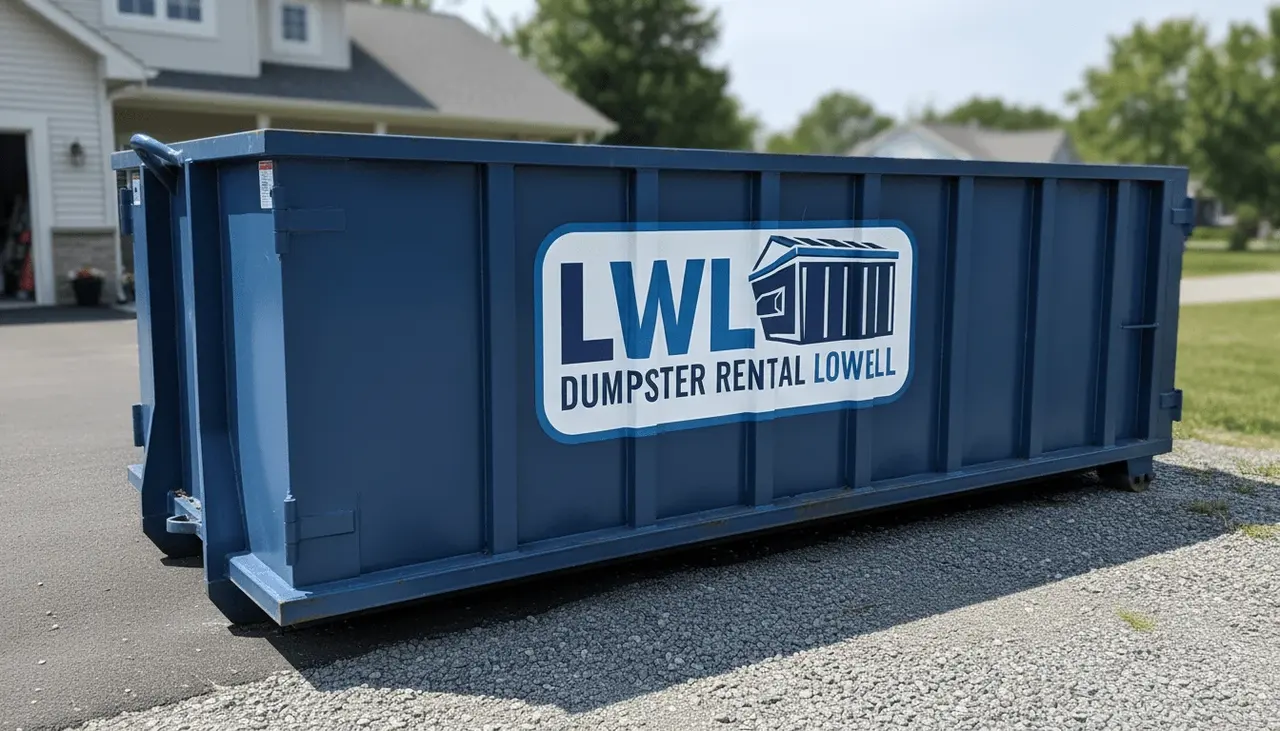
A general household or construction roll-off dumpster from LWL is meant for everyday trash, renovation debris, and bulky junk that isn't on the list above — think old furniture, carpet, general household clutter, non-recyclable packaging, and mixed demolition material that doesn't separate out cleanly. The waste ban doesn't mean you can never dispose of a banned item; it means that item has to be routed to the right recycling or take-back stream instead of the general dumpster, because the receiving facility is legally required to pull it out (or refuse the load) if it shows up mixed in.
In practice, that means a few categories deserve separate handling rather than going straight into the container:
- Mattresses and box springs — keep these out of a general roll-off; most Middlesex County communities run a bulky-item or mattress take-back program, and mattress recyclers will often take them directly.
- Yard waste — leaves, brush, grass clippings, and branches are banned from landfill disposal and typically need to go through composting or a municipal yard-waste program rather than a mixed-debris dumpster. If your project is mostly yard cleanup, ask about a yard waste dumpster, which is set up to route material correctly.
- Large appliances and electronics — refrigerators, washers, dryers, and any CRT-based TV or monitor need appliance or e-waste recycling, not the general container.
- Loose shingles from a full tear-off — asphalt shingles aren't on the state ban list the way ABC materials are, but many roofing tear-off jobs generate enough weight that sizing and disposal routing still matter; ask before loading a full tear-off into a smaller container.
- Heavy concrete or masonry-only loads — because ABC material is banned from landfill and typically priced and processed differently than mixed debris, pure concrete, block, or brick loads are usually better suited to a dedicated concrete and heavy debris container than a standard mixed dumpster.
Everything else — general trash, furniture, carpet, cabinetry, mixed renovation debris, and typical junk-removal material — is fine in a standard container. If you're not sure which dumpster size fits your project once you've sorted out what's banned versus what isn't, our dumpster sizing guide is a good next stop, and that's a conversation worth having before delivery, not after.
Construction & Demolition Debris Gets Its Own Rules
Construction and demolition projects deserve a separate mention because so much of what they generate — asphalt, brick, concrete, metal, and wood — sits directly on the waste ban list. Massachusetts requires C&D processors and transfer stations to divert these materials for recycling rather than landfilling them, which is part of why C&D debris is typically handled through specialized recycling facilities rather than standard municipal solid waste disposal. For a Lowell property owner, that mostly means one thing in practice: a dedicated construction or demolition debris dumpster gets routed to a facility equipped to sort and recycle those materials, which keeps the job compliant without adding extra steps on your end. Renovation work inside one of Lowell's old mill buildings is a good example — that kind of gut-renovation debris is often heavy on wood, metal, and masonry, exactly the categories the waste ban targets, and it's worth reading a dedicated breakdown of mill-building renovation debris before that kind of project starts.
Mattresses, Box Springs & Textiles: The Newest Additions
Of everything on the list, the mattress, box spring, and textile ban is the newest and the one people most often don't know about, since it only took effect on November 1, 2022. Before that date, mattresses and old clothing could legally go into a landfill-bound load in Massachusetts. Now they can't, statewide, regardless of which town or hauler is involved. The reasoning tracks the rest of the ban list: mattresses are bulky and take up disproportionate landfill volume relative to their weight, and both mattresses and textiles have real, functioning recycling and reuse markets in Massachusetts — mattress recyclers break units down into steel, foam, and wood components, and textile recovery organizations resell or repurpose usable clothing and process the rest into industrial rags or fiber. If a renovation or estate cleanout in Lowell turns up a mattress, box spring, or bags of old clothing and linens, plan to route them separately rather than tossing them in with general debris.
Middlesex County Recycling & Disposal Context
Lowell sits in Middlesex County, Massachusetts' most populous county, and like most Massachusetts municipalities, Lowell runs its own municipal solid waste and recycling program through the city's Solid Waste & Recycling Office rather than a single county-wide landfill or transfer station. That's normal for the region — Massachusetts closed most of its municipal landfills decades ago, and solid waste today mostly moves through a network of private transfer stations, recycling processors, and regional disposal facilities rather than a single local dump. For Lowell residents specifically, the city's Solid Waste & Recycling Office is the right first stop for curbside recycling questions, bulky-item pickup, and any city-run yard-waste or textile drop-off programs; a licensed dumpster company handles the equivalent routing on the commercial side for anything that comes out in a rented container.
The practical takeaway for Middlesex County property owners is the same whether you're in Downtown Lowell, out toward Chelmsford, or across the New Hampshire line in Nashua or Salem: the MassDEP Waste Ban list is a statewide rule, not a Lowell-specific one, so it applies the same way regardless of which town the dumpster sits in for pickup.
How LWL Dumpster Rental Handles Waste Ban Compliance
LWL Dumpster Rental works with facilities equipped to sort and recycle banned materials that come through in mixed loads, but the cleanest, fastest, and cheapest path is always sorting the obvious categories — mattresses, yard waste, appliances, tires — before the container gets loaded rather than after. If you're planning a renovation, estate cleanout, or full property clear-out anywhere in the Lowell area and you're not sure how a specific material should be handled, the fastest way to get a straight answer is a phone call before delivery, not a guess on load day. LWL is locally owned and operated out of Lowell, and sorting out waste-ban questions before a container drops is a normal part of scheduling a rental, not an inconvenience.
If your project involves a mix of renovation debris, old furniture, and questionable items you're not sure belong in a general container, call LWL Dumpster Rental to talk through what you're clearing out and get the right size and routing sorted before delivery. It's a lot easier to plan around the waste ban list upfront than to deal with a rejected load partway through a project.