Why Getting the Size Right Matters
Renting a dumpster in Lowell should be simple, but the sizing question trips up almost everyone the first time. Order too small and you're stuck paying for a second haul mid-project, with a truck rescheduled around your driveway and your timeline. Order too large and you're paying for empty space you never filled, parked on a South Street or Highlands driveway for a week longer than you needed. Between the mill-building conversions downtown, the triple-decker rental turnovers in The Acre and Centralville, and the single-family renovations spreading out toward Pawtucketville and Belvidere, Lowell's housing stock is varied enough that "just get the biggest one" is often the wrong answer, not the safe one.
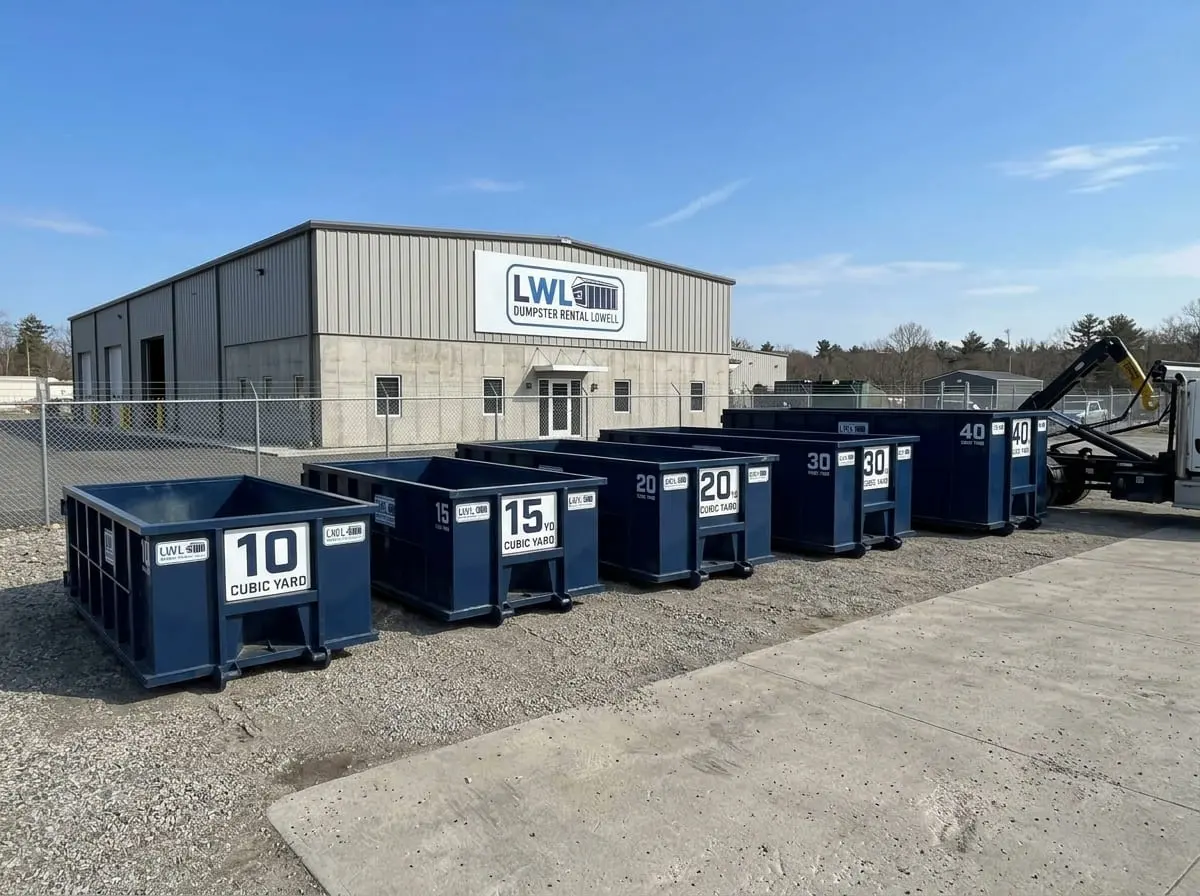
This guide walks through the five standard roll-off sizes — 10, 15, 20, 30 and 40 yard — what each one actually holds, who each one is really built for, and the weight-limit basics that catch first-time renters off guard. For a full breakdown of every option, see the dumpster sizes hub, or call LWL Dumpster Rental directly and describe your project — matching size to job is exactly what a same-day quote call is for.
Dumpster Sizes at a Glance
Treat this table as a starting point rather than the final word — material type changes the math fast. A 20-yard dumpster full of drywall and lumber and a 20-yard dumpster full of roofing shingles or concrete are very different loads, and weight, not just volume, is often what decides which size actually makes sense.
10-Yard Dumpster: Small Cleanouts and Tight Driveways
The 10-yard is LWL's smallest roll-off and the right call for a single-car garage cleanout, a small bathroom gut, a modest landscaping job, or clearing out a shed before a move. It's also the easiest size to fit on a narrow triple-decker driveway or a tight urban lot in The Acre or Back Central, where curb space and driveway width are real constraints. If your project is "get rid of what's cluttering one room or one small structure," start here — see the 10-yard dumpster page for exact dimensions and load examples.
15-Yard Dumpster: The Middle Ground
The 15-yard sits between "small cleanout" and "real renovation." It's a good fit for a single-room remodel, a deck or fence removal, a mid-size basement cleanout, or a rental turnover that's heavier than a quick sweep but not a gut renovation. A lot of Lowell renters land here after starting to estimate a 10-yard and realizing the project has more volume than they first thought — old furniture, flooring, and construction scraps add up quickly once you actually start hauling.
20-Yard Dumpster: The Most Popular Size
For most Lowell homeowners, the 20-yard is the workhorse. It's the standard choice for a kitchen remodel (cabinets, countertops, flooring, drywall), a whole-house declutter ahead of a sale or move, a multi-room flooring tear-out, or a general contractor cleanup on a mid-size job. If you're not sure which size to pick and your project is bigger than "one room" but smaller than "the whole house," the 20-yard is the safest default — full details are on the 20-yard dumpster page.
30-Yard Dumpster: Whole-House and Major Renovation Work
The 30-yard is built for volume: whole-house renovations, room additions, large estate cleanouts, and general contractor jobs generating steady debris over several weeks. It's common on the mill-building loft conversions downtown, where a single unit can generate framing, drywall, flooring and old fixtures in quantities a 20-yard would burn through in days. See the 30-yard dumpster page for placement requirements — at this size, driveway and street clearance planning matters more.
40-Yard Dumpster: New Construction and Major Demolition
The 40-yard is LWL's largest container, sized for new home construction, full roof tear-offs on larger structures, commercial buildouts, and major demolition debris. It's not usually the right call for a residential cleanout — the volume goes to waste and the footprint is substantial — but for a contractor running a multi-week job, it cuts down on swap-outs and keeps the site moving. Full specs are on the 40-yard dumpster page. Roofing tear-offs deserve special attention here: a full re-roof on a mid-size home can generate several tons of shingles alone, which means the right call is often a 20-yard or 30-yard sized specifically for weight rather than a 40-yard sized for volume it will never use. When in doubt on a roofing job, describe the square footage and layer count on the phone and we'll size it correctly the first time.
Weight Limits: The Factor Homeowners Forget
Volume is only half the sizing question. Every roll-off dumpster has a weight limit built into the rental price, and heavy materials fill that limit long before they fill the box. Shingles, concrete, brick, dirt, and drywall are all dense — a 20-yard dumpster loaded with roofing shingles can hit its weight limit while still looking half-empty, while the same size loaded with bulky-but-light furniture and cardboard might never come close. This is exactly why a roofing tear-off, a concrete removal job, and a garage cleanout of the same "volume" can call for different-sized containers or different weight allowances.
Overloading a dumpster past its weight limit typically means an added overage fee at the transfer station or landfill, billed after the fact — the kind of surprise that's easy to avoid with one phone call up front. When you book with LWL, tell us the material type (not just "how much stuff"), and we'll match the size and weight allowance to the actual job, whether that's a light household decluttering or a heavy load of concrete and construction debris. For material-specific weight and volume figures, the EPA's construction and demolition debris data shows how much heavier materials like concrete, brick and roofing outweigh general household debris at the same volume, which is exactly why weight, not just cubic yards, drives the real cost of a job.
Massachusetts also restricts certain materials from landfill disposal entirely under MassDEP's waste ban rules — mattresses, textiles, and construction and demolition debris loads all have separate handling requirements, and mixing banned material into a general debris dumpster can add sorting fees. See the MassDEP waste disposal ban guide for the current list, and confirm with our team before loading anything you're unsure about.
Real Lowell Projects: Two Sizing Examples
Two project types come up often enough in Lowell that they're worth walking through directly.
Mill-building loft renovation, downtown. Converting a unit inside one of Lowell's old textile mills — the kind of brick-and-beam building the Boott Cotton Mills Museum and Lowell National Historical Park preserve examples of — usually means stripping old flooring, removing dated fixtures, and disposing of framing and drywall debris from a full interior buildout. These jobs typically call for a 20-yard or 30-yard dumpster depending on unit size, and building access matters as much as container size: loading docks, freight elevators, and shared parking areas around the historic mill complexes often set real limits on where a roll-off can sit. Our mill building renovation debris guide covers placement logistics specific to these conversions in more detail.
Triple-decker attic and basement cleanout. Lowell's neighborhoods, like much of industrial New England, have a substantial stock of triple-decker housing — three-story, three-unit buildings built to house mill workers a century ago and still common as rental housing across The Acre, Centralville, and Back Central today. A full attic-to-basement cleanout across one of these buildings, especially between tenants or ahead of a sale, often generates more volume than owners expect: decades of accumulated storage, old insulation, and sometimes multiple units' worth of debris at once. A 15-yard or 20-yard dumpster handles a single unit's cleanout comfortably; a whole-building cleanout across all three floors often justifies stepping up to a 20-yard or 30-yard. Driveway width is the usual constraint here, so confirm placement with our team before delivery day.
How to Choose: A Quick Checklist
Walk through these questions before booking:
- How many rooms or structures are involved? One room or a garage points toward a 10 or 15 yard; a whole house points toward 20 or 30.
- What's the material? Heavy materials (shingles, concrete, dirt, brick) hit weight limits fast — size down on volume and confirm the weight allowance. Bulky, light materials (furniture, cardboard, general household junk) can fill a larger box without hitting weight limits.
- Is this new construction or a teardown? New builds and full tear-offs usually call for 30 or 40 yard containers, especially on multi-week jobs.
- Where will it sit? A driveway limits you differently than a street placement, which in Lowell may require a permit — see our street placement and permit guide if the dumpster needs to go on the street rather than a driveway.
- Is there a hard deadline? If you're working against a closing date or a lease turnover, size up slightly rather than risk a mid-project swap.
Still not sure? That's normal, and it's the fastest call we take. Describe the project — room count, material type, rough timeline — and our team will recommend a size on the spot. See current dumpster rental cost guide for pricing by size, or browse real completed jobs in our real project examples guide. One more note if the project involves any digging, fence posts, or in-ground work alongside the debris removal: Massachusetts law requires calling 811 through Dig Safe at least 72 hours before you break ground, separate from the dumpster booking itself but worth planning around the same timeline.
Ready to Book?
Sizing a dumpster correctly the first time saves a second delivery fee, a blocked driveway, and a mid-project scramble. LWL Dumpster Rental has been matching Lowell homeowners and contractors to the right container size since 2013, and we'd rather talk through your project on the phone than have you guess. Call us and describe the job — we'll tell you straight whether it's a 10-yard or a 30-yard, and why.