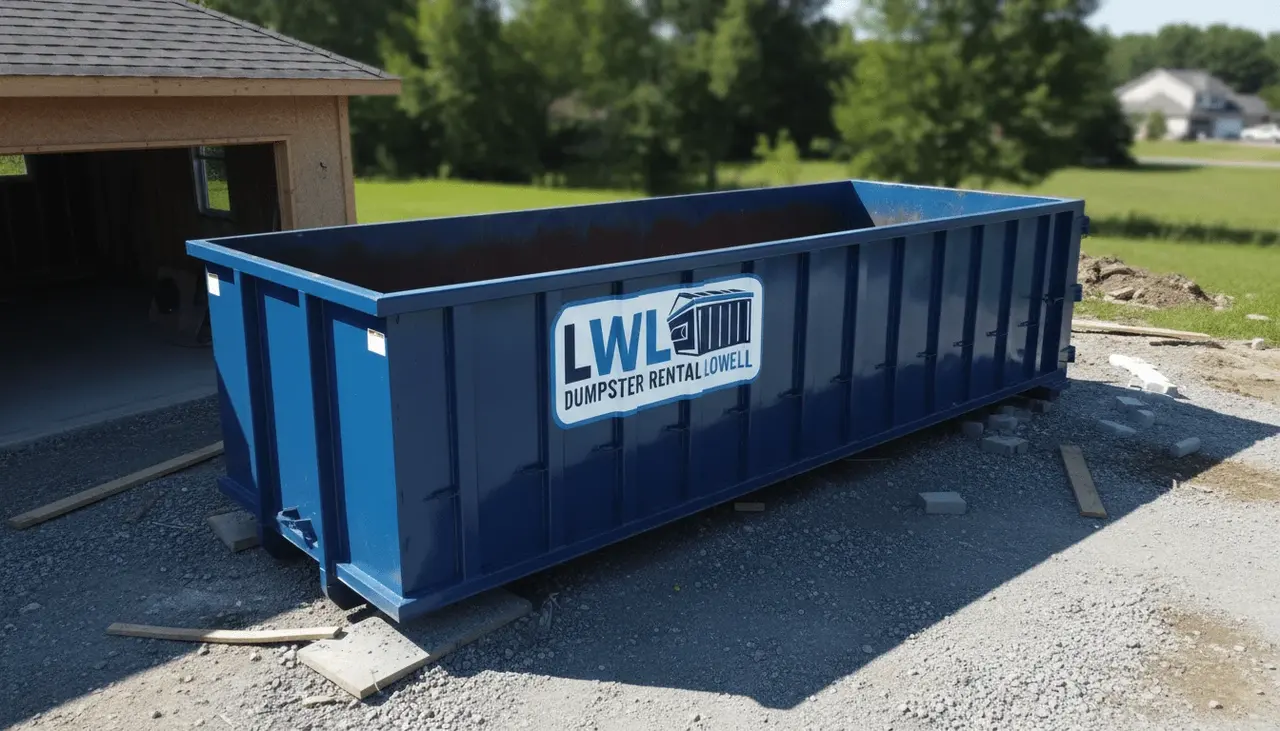
Why Lowell Homeowners Ask This Question So Often
If you've rented a roll-off before in a suburban town, you probably never thought twice about where it would sit — it went in the driveway, end of story. Lowell is different. Between narrow lots in The Acre, tight triple-decker driveways in Centralville, and on-street parking pressure in Back Central, a lot of Lowell properties simply don't have anywhere on-site for a 15 or 20 yard container to land. That single fact is why "do I need a permit for this?" comes up more in Lowell than it does in Chelmsford or Tewksbury, and why it deserves a straight answer instead of a guess.
The Short Answer: It Depends on Where the Dumpster Sits
The general rule that applies almost everywhere, including Lowell, is this: a dumpster placed entirely on private property — your driveway, yard, or a parking lot you control — typically does not require a city permit. A dumpster placed in the street, on the sidewalk, or anywhere in the public right-of-way generally does, because the moment a container sits on city-owned pavement, the city has a legitimate interest in making sure it isn't blocking a travel lane, a fire hydrant, a snow route, or emergency access.
Lowell is no exception to that framework. The City maintains an official Dumpster & Pod Permits page through its permitting system, which confirms Lowell treats dumpster and POD placement as a permitted activity when it isn't confined to private property. We weren't able to pull the current fee schedule or a step-by-step application walkthrough directly from that page, so treat the specifics below as a starting point, not gospel — confirm the current fee and paperwork with the City before your delivery date.
Placing a Dumpster on Private Property: Usually No Permit Needed
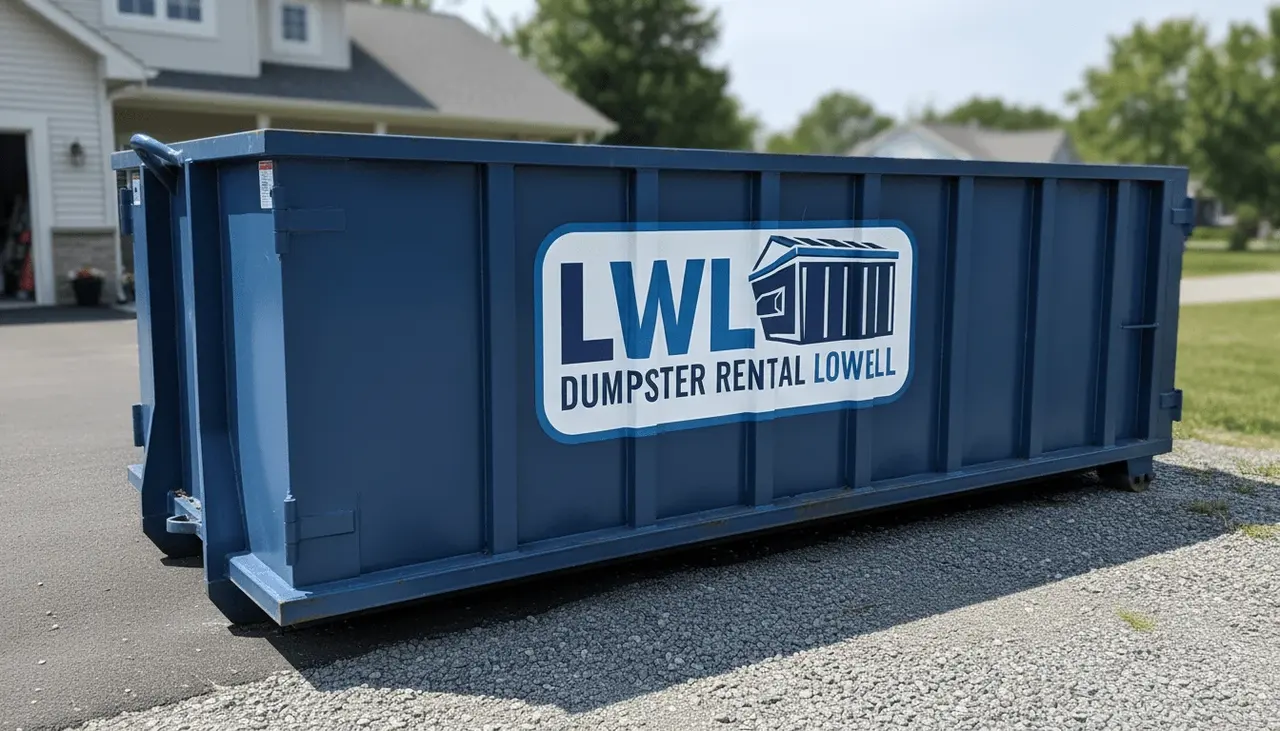
If your driveway, side yard, or backyard can physically fit the container and a delivery truck can reach it, you're almost always in permit-free territory. This covers the majority of single-family homes in Belvidere, Highlands, Pawtucketville, and South Lowell, where driveways and side lots give a roll-off somewhere to sit without touching city pavement. A few practical notes still apply even when no permit is required:
- Lay down plywood under the drop point if you're worried about a driveway surface — this is a courtesy to your own property, not a city requirement.
- Keep the container clear of utility meters, gas shutoffs, and anything the fire department might need to access in an emergency.
- If the truck delivering it needs to swing wide or briefly use the street to maneuver, that's normal and doesn't turn a driveway placement into a street placement.
For most residential cleanouts, roofing tear-offs, and renovation projects across Lowell's less densely built neighborhoods, this is the end of the permit question. See our dumpster size guide for help matching a container to a driveway that fits.
When the Street Becomes the Only Realistic Option
Lowell's older housing stock changes the math. A three-decker in The Acre or Centralville, built shoulder-to-shoulder with its neighbors before anyone anticipated off-street parking for three units, often has no driveway at all — or one so short it can't hold a car and a dumpster at the same time. Downtown and parts of Back Central have similar constraints: narrow lots, on-street parking that residents depend on, and buildings set close to the sidewalk. In these situations, a homeowner, landlord, or contractor may have no choice but to place the container at the curb.
That's exactly the scenario Lowell's dumpster and pod permitting process exists for. If curb placement is unavoidable, plan on it from the start rather than discovering it on delivery morning — permits, where required, take time to process, and a driver who shows up to find no legal place to drop a container has to reschedule.
What Lowell's Municipal Code Actually Says
Beyond the dedicated permits page, Lowell's own City Code backs up the private-vs-public distinction in a few concrete places we verified directly:
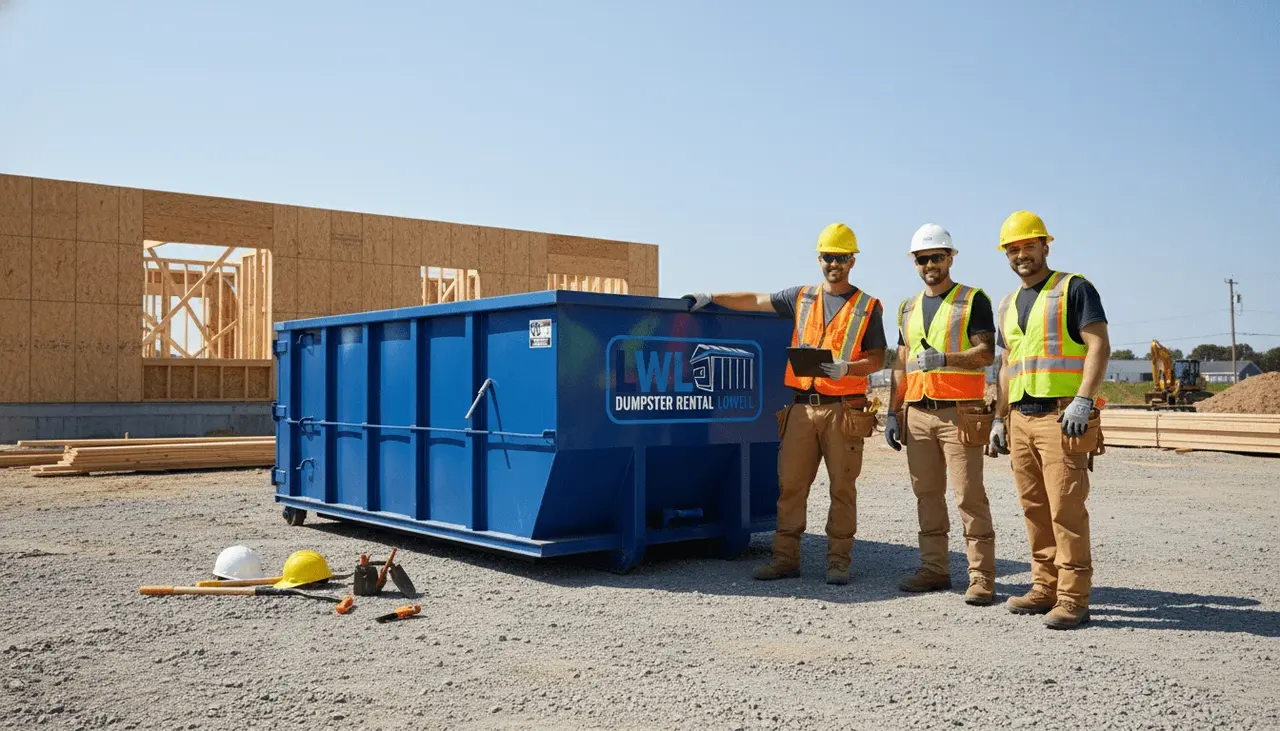
- Chapter 115, §115-2 (Construction Dumpsters): when a dumpster is tied to an active building or demolition permit, the code treats it as part of that permit rather than requiring a separate dumpster permit — but it must be removed within 10 days of the construction or demolition work being completed, with fines for containers left sitting past that window.
- Chapter 243, §243-4 (Streets and Sidewalks — obstructions): the code generally prohibits placing rubbish or an obstruction "in or upon any public place without written permission" — the ordinance language behind why anything sitting in the public way, dumpsters included, needs the City's sign-off.
- Chapter 171, §171-13 (Refuse Dumpsters): a related section covering longer-term waste dumpsters requires permits through the City's Development Services office and gives the Board of Health authority over location and screening — a reminder that Lowell does actively regulate where dumpsters of various kinds can sit, not just whether one exists.
None of these sections we could access spelled out an exact fee for a short-term roll-off street placement permit, and fee schedules change, so don't rely on a number you find on a third-party site. Call Lowell's Development Services or Department of Public Works directly, or ask your rental company (a reputable local hauler like LWL Dumpster Rental should be able to point you to the current process even if they don't pull the permit on your behalf).
Lowell Neighborhoods Where This Comes Up Most
Not every Lowell block faces this dilemma equally. A few real patterns worth knowing before you book a container:
- The Acre: dense triple-decker blocks close to the old mill canals, minimal off-street parking, and narrow lots mean curb placement is common for anything bigger than a small cleanout.
- Centralville: similar triple-decker density north of the Merrimack River, with many homes built well before driveways were standard.
- Back Central: a mix of multi-family housing and tighter lots where a dumpster can eat up scarce resident parking if it isn't planned carefully.
- Downtown: mixed commercial and residential frontages, sidewalk clearance rules, and higher foot traffic all factor into where a container can legally sit.
By contrast, homeowners in Belvidere, Highlands, Pawtucketville, and South Lowell — and in most of the suburban towns LWL serves — usually have enough driveway or yard space that the permit question never comes up at all.
How to Find Out If Your Project Needs a Street Permit
Before you commit to a delivery date, walk your property and ask a few honest questions:
- Can a roll-off actually fit in the driveway or yard, with room for the delivery truck to maneuver in and out?
- If it fits, will it block a door, a gas meter, a fire escape, or a neighbor's only path to their unit?
- If it doesn't fit on the property at all, is the closest curb space realistic — not blocking a hydrant, a crosswalk, a bus stop, or a designated snow route?
If the answer points to the street, contact the City of Lowell directly through its Dumpster & Pod Permits page (see the link above) or Development Services office before your delivery date, since the City — not your rental company — is the authority that issues (or denies) that permission. It's also worth checking whether your street sits on a scheduled paving or utility project, since those can affect what's allowed curbside on short notice; Lowell's Public Works Department posts active projects on its own pages.
Utility Awareness Matters Even on Private Property
Permit or no permit, a dumpster that sits over or near a buried utility line, a septic cover, or a sprinkler main is a problem waiting to happen. If your project involves any digging near the drop zone — footings, a fence line, a new driveway apron — call 811 through Dig Safe before anything gets marked out or moved. Our Dig Safe guide walks through how that free service works in Massachusetts.
Practical Tips for a Smooth Placement, Wherever It Lands
- Measure first. A 10 or 15 yard container needs meaningfully less width and swing room than a 20 or 30 yard box — sizing down can sometimes turn a street placement into a driveway placement. Our dumpster size guide breaks down footprints by yardage.
- Book ahead when a permit is involved. Same-day delivery is realistic for private-property drops; a curbside placement that needs city sign-off is not something to plan the morning of.
- Tell your hauler the truth about access. Let LWL Dumpster Rental know up front if your only option is the street — it changes what size truck we send and how we plan the drop.
- Keep it accessible for pickup, not just delivery. A container that was fine to drop off but gets boxed in by parked cars on pickup day causes real delays.
- Renovation and demolition sites: remember the 10-day clock under §115-2 once work wraps up — don't let a construction dumpster linger past that window.
For mill-building and renovation-heavy projects specifically, where a job site dumpster often needs to sit at the curb for weeks at a time, see our Mill City renovation debris guide. If you're weighing whether a dumpster or a junk removal crew makes more sense for a tight-access property, our junk removal vs. dumpster rental comparison is a useful next read, and our Lowell dumpster cost guide covers what affects pricing beyond size alone.
How LWL Dumpster Rental Helps
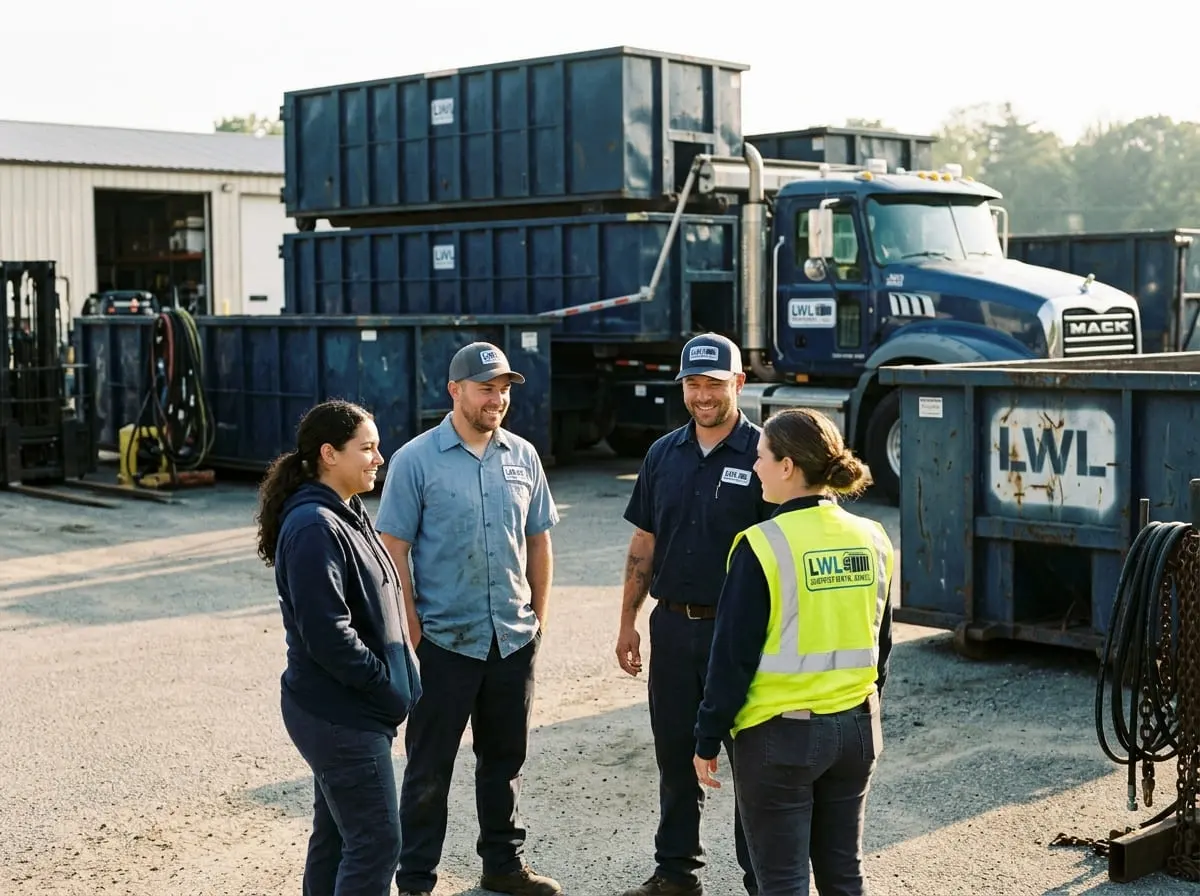
We deliver roll-offs across Lowell's neighborhoods every week, from wide Highlands driveways to tight Acre triple-decker lots, so we've seen firsthand which streets have room to spare and which ones don't. When you call us at (978) 848-1596, tell us your address and what the project involves — we'll talk through where the container realistically fits, flag it early if your situation looks like a street-placement case, and point you to the right City of Lowell contact so you can confirm the permit before delivery day. We handle the roll-off delivery and construction debris side of the job; the City handles the permit. Getting both pieces lined up before the truck shows up is what keeps a project on schedule.
Have questions about your specific property, or want to talk through options before you book? Reach out through our contact page or give us a call — and see our FAQ page for more on how delivery and pickup logistics typically work.