Lowell earned the nickname "Mill City" honestly. The brick mill complexes that line the Pawtucket and Merrimack canals were built to run textile machinery around the clock, and that meant building them heavier, taller and more permanently than almost anything constructed in the region since. More than a century after the last power looms went quiet, a good number of those same buildings are back under active construction — this time as apartments, offices and mixed-use space instead of spinning frames. If you're a contractor, developer or property owner working on one of these conversions, the debris coming out of a mill building is a different animal than what comes out of a triple-decker gut renovation, and planning your dumpster rental around a home-remodel mindset is a good way to end up with a container that's undersized, overweight, or both.
A Real, Ongoing Redevelopment Wave
This isn't a hypothetical trend piece. The City of Lowell has spent years actively steering redevelopment of its old mill and canal-front parcels through the Hamilton Canal Innovation District, a formal planning area named for the real Hamilton Canal that has already brought judicial, residential and mixed-use projects onto formerly industrial land near downtown. In March 2026, Lowell's Historic Board signed off on plans for a new canal-front apartment complex of more than 350 units within that district — the latest in a string of approvals that keep bringing heavy construction activity back to the canal corridor, and a strong signal that this isn't a one-off project but an ongoing pipeline of work.
The pattern isn't new to Lowell, either. Counting House Lofts, a WinnDevelopment adaptive-reuse project, turned a historic mill counting house into mixed-income housing. Massachusetts Mills, the sprawling brick complex off Bridge Street, has been converted into apartments and condos in phases over the past two decades. The Apartments at Boott Mills did the same with a building that sits practically next door to the Lowell National Historical Park and the Boott Cotton Mills Museum, where visitors can still walk through an operating weave room and see exactly the kind of structure that's now getting reconverted a few blocks over. Every one of these projects generated a debris stream that looked nothing like a kitchen gut job, and every one of them needed a hauler who understood that going in rather than figuring it out mid-demo.
For a contractor bidding this kind of work, the takeaway is simple: Lowell's mill-conversion pipeline isn't slowing down, and each new project along the Hamilton, Pawtucket or Merrimack canal corridors means another building full of century-old structural material that has to come out before anything new can go in.
Why Mill Debris Isn't Home-Remodel Debris
A typical residential remodel in Lowell — a triple-decker unit refresh, a Highlands kitchen tear-out, a Belvidere bathroom gut — produces drywall, some framing lumber, cabinetry, tile and asphalt shingles. It's bulky but it's light relative to its volume, and one 20-yard dumpster or even a 15-yard container usually handles it without hitting a weight limit before the box fills up.
Mill buildings flip that math. These structures were engineered between the 1820s and early 1900s to carry the vibration and load of running machinery, which means:
- Old-growth timber framing. Mill floors and roof structures were commonly built with massive old-growth timber posts, beams and joists — often 8x8, 10x10 or larger, dense, and still heavy even after a century of drying out. A single removed beam section can weigh more than an entire stud wall pulled from a house.
- Solid masonry. Mill exteriors and many interior firewalls are multi-wythe brick, sometimes two or three feet thick at the base. Selective demolition around window openings, elevator shafts or new mechanical penetrations produces brick and mortar debris by the ton, not the yard.
- Cast iron and heavy steel. Column bases, stair stringers, elevator components, old line-shafting hardware and radiator systems show up throughout mill interiors. It's recyclable, but it's dense and needs to be loaded and hauled with that weight in mind rather than tossed in loose.
- Wide-plank flooring. Original mill floors are frequently thick, wide-plank pine or maple, sometimes with a bolted-on subfloor layer added during a mid-century use change. Removing it in sections generates heavy, splintery loads that don't compact the way household lumber does.
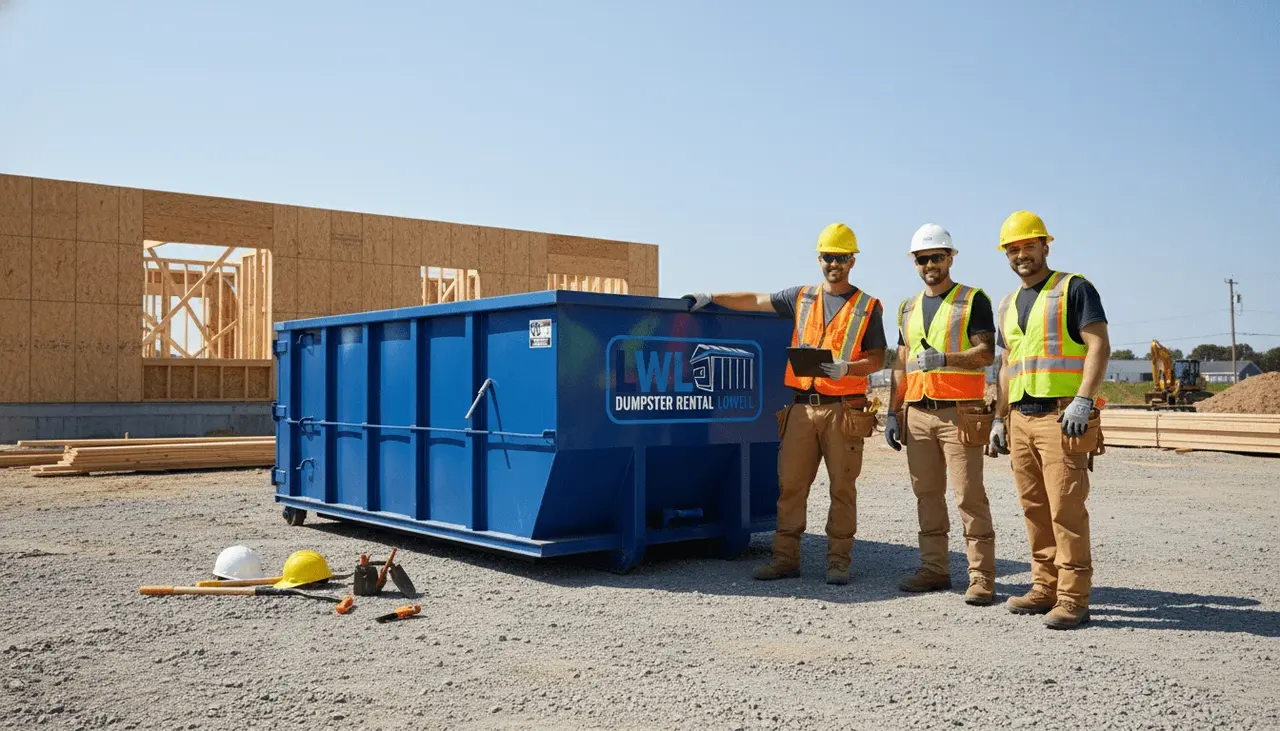
Put plainly: the same size container that swallows a house remodel without complaint can be tonnage-limited on a mill job well before it's visually full. That's why demolition debris removal and concrete and heavy debris hauling on a mill conversion usually mean sizing up from the start, not sizing to the same number you'd use on a house down the street.
Lead Paint and Asbestos: A Separate Track From Your Dumpster
Lowell's mill stock predates modern building materials by a wide margin, which means lead paint and asbestos-containing materials are a real possibility on these projects, not an edge case to shrug off. Federal rules under the EPA's Lead Renovation, Repair and Painting (RRP) Program apply to disturbing painted surfaces in most housing and child-occupied facilities built before 1978, and Massachusetts layers its own asbestos notification requirements on top through MassDEP — projects disturbing regulated asbestos-containing material generally require formal notification and a licensed abatement contractor, as detailed in MassDEP's asbestos and demolition notification guidance.
What this means in practice for a mill conversion: lead paint chips, pipe insulation, floor tile mastic, and certain plaster or roofing materials identified as asbestos-containing cannot simply go into a general construction dumpster alongside everything else. They need to be tested, and where regulated materials are confirmed, removed by a licensed abatement contractor and disposed of through a separate, permitted waste stream before general demolition debris starts filling the roll-off. Sequencing this correctly — abatement first, structural demolition into the dumpster second — keeps the project compliant and keeps your container loads clean, which matters both for safety and for avoiding a rejected load at the disposal facility. This is worth flagging early with your general contractor or project engineer rather than discovering it mid-demo; a dumpster rental cost estimate for a mill job should be built around the structural debris volume once abatement is already accounted for separately, not around an assumption that everything can go in one container stream.
Sizing Containers for a Mill-Scale Job
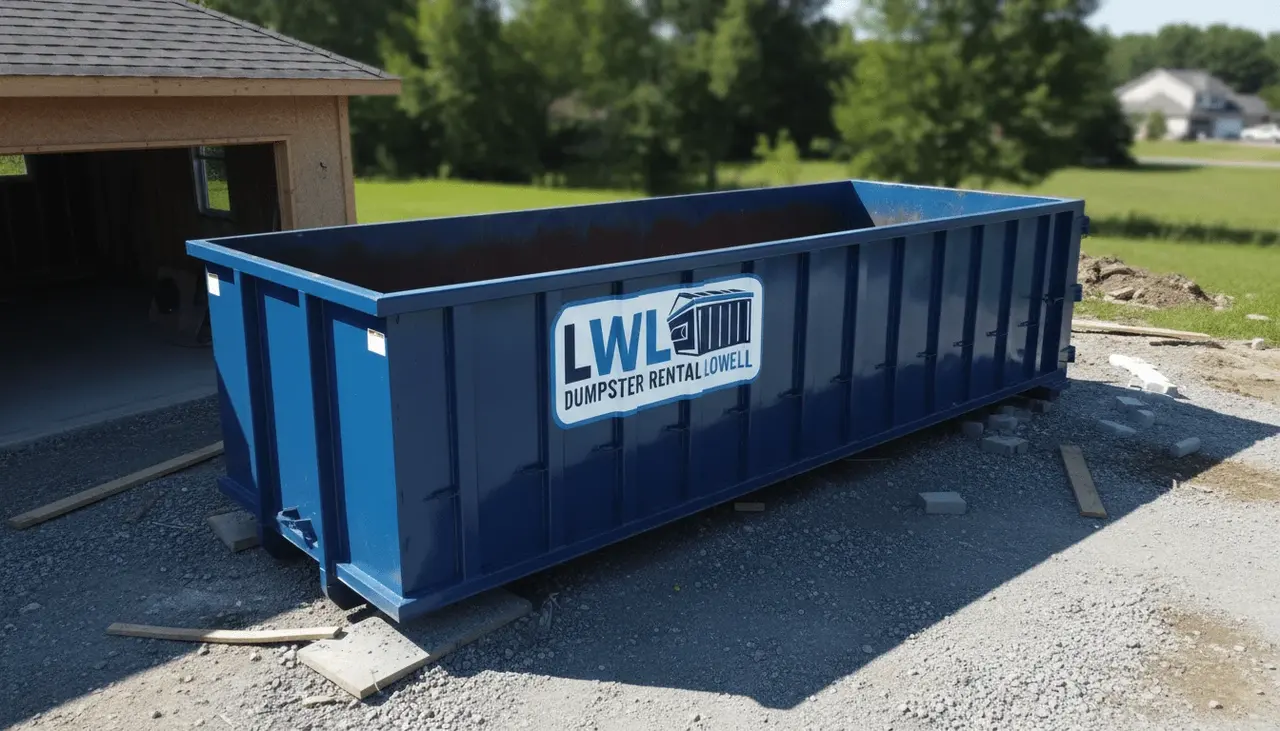
Because mill debris runs heavy, most conversion and gut-renovation projects in these buildings need 30-yard or 40-yard dumpsters rather than the 15- or 20-yard sizes that cover a typical house. Even then, weight limits — not just cubic yardage — tend to be the real constraint on brick, timber and masonry loads, so it's worth discussing expected tonnage per container up front rather than guessing at delivery. Larger commercial and mixed-use conversions often need multiple containers cycling through on a set swap schedule rather than one box sitting on site for the length of the job, which keeps a demolition crew from working around a full dumpster for days at a stretch. Our full dumpster size guide breaks down yardage and typical load capacity if you're scoping a project and want a starting point before getting a specific quote.
Multi-story mill buildings also raise a practical loading question that houses don't: getting debris from an upper floor down to street level. Chutes, hoists or staged interior collection points are common on these jobs, and knowing exactly where the dumpster will sit relative to the building's loading access shapes both the size and the placement plan before delivery day.
Placement on Canal-Adjacent and Downtown Streets
A meaningful share of Lowell's mill stock sits directly along the canal system or on narrow downtown streets with limited curb space, on-street parking pressure, and in some cases direct sightlines to the National Historical Park. Placing a large roll-off dumpster on a public way in these areas typically requires a street placement permit, and containers set near canal walkways or park-adjacent property need extra care around access and appearance. If your project is anywhere downtown, in The Acre, or along one of the canal corridors, it's worth reading through our Lowell dumpster permit and street placement guide before delivery day, since permitting timelines can affect your overall project schedule if they're not handled early in the planning process.
Where the Debris Actually Goes
Once regulated materials are handled separately, the bulk of a mill renovation's remaining debris — brick, timber, plaster, flooring — still needs a compliant disposal path. Construction and demolition debris is subject to Massachusetts' waste ban rules, and metal, wood and other separable materials are often more efficiently recycled than landfilled, both for cost reasons and for compliance with those bans. Old-growth timber in particular sometimes has salvage value rather than disposal cost, since reclaimed mill lumber is sought after for flooring and furniture work; it's worth asking whether beams or planks pulled during demo can be set aside rather than mixed into a general debris load. Our Middlesex County landfill and recycling guide covers where different material streams from a Lowell-area project typically end up.
Planning a Mill Conversion Project With LWL
Whether you're gutting a single unit inside an already-converted mill building, doing structural work ahead of a larger adaptive-reuse project, or clearing out decades of accumulated material before a historic renovation even starts, sizing the job correctly from the start saves both time and money. LWL Dumpster Rental works with contractors and developers across Lowell and the Merrimack Valley on construction debris removal and heavy-material haul-off, and we size containers around actual project weight, not just a guess at yardage. If you're not sure where to start, our dumpster sizing guide is a reasonable first stop — but for a mill or historic-building project specifically, a quick call gets you a far more accurate answer than a general size chart can. Call (978) 848-1596 to talk through your project.