Mill Building Renovation Debris in Lowell, MA | LWL
As Lowell's historic mill buildings keep getting converted into lofts, offices and mixed-use space, their renovation debris runs heavier and more regulated than a typical home remodel.
ReadLowell, MA guide
A practical guide for Lowell landlords and property managers on clearing out apartments and triple-deckers between tenants, from the May/August student turnover crunch to sizing, permits, and disposal rules.
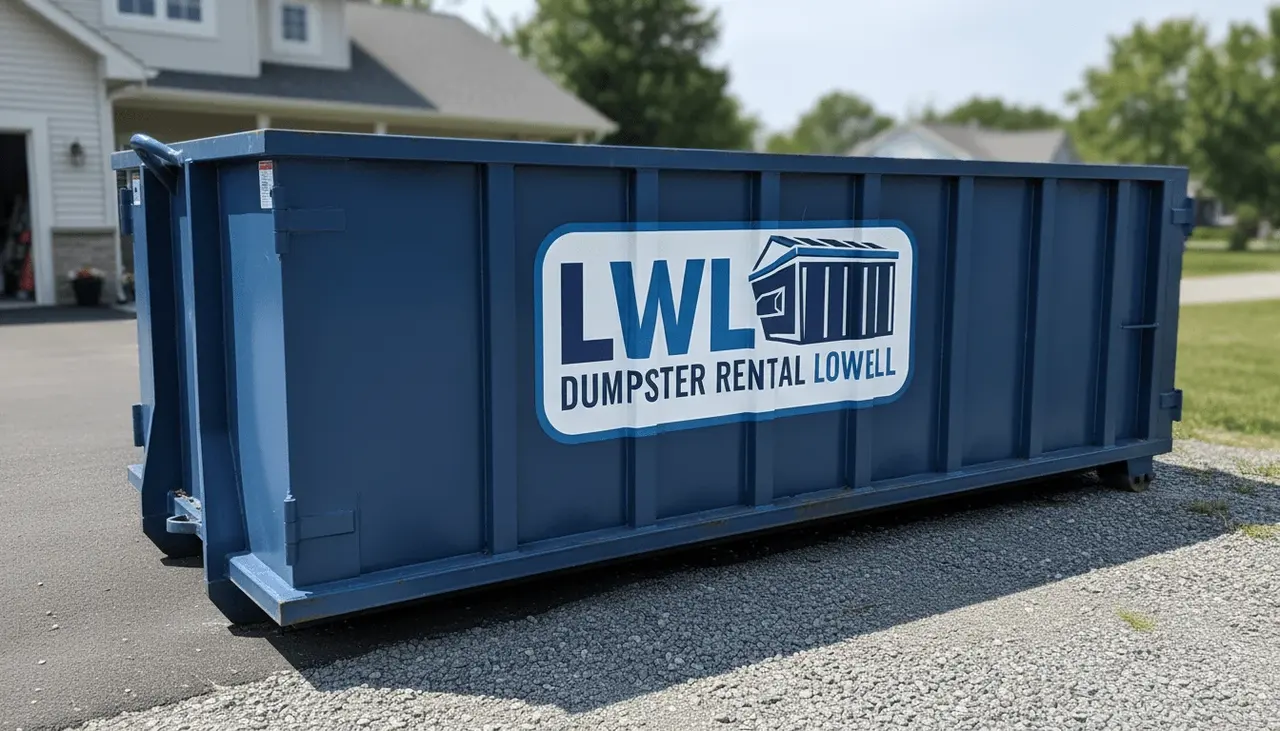
Lowell has more multi-family housing per block than almost any city its size in Massachusetts, and that density turns "renter turnover" into a year-round job rather than a once-a-year headache. Between the city's stock of triple-deckers, the steady churn of off-campus student housing near UMass Lowell, and the ordinary rhythm of leases starting and ending, property managers here are almost always cleaning out something. A rented dumpster is usually the fastest, least chaotic way to do it — if it's sized right and timed to your actual turnover window rather than ordered in a panic the week a tenant leaves.
Lowell's housing stock is built around the multi-family frame house — three-deckers stacked in tight rows through The Acre, Centralville, Pawtucketville and Back Central, plus larger converted apartment buildings closer to Downtown and Belvidere. That density means a landlord here isn't usually cleaning out one house a year. It's often two, three, or a dozen units on overlapping timelines, each with its own pile of stuff a departing tenant didn't want to move. A single vacated unit can leave behind a mattress, a couch too wide for the stairwell, a broken microwave and half a closet of clothes. Multiply that across a whole building and a turnover cleanout stops being a weekend errand with a pickup truck and starts being a logistics problem — the kind a single rented dumpster solves far more efficiently than a string of transfer-station runs squeezed between showings and paperwork.
It also means timing matters more here than it would for a single-family rental. A triple-decker owner with all three units on the same lease cycle is effectively running one large cleanout instead of three small ones, and coordinating a single dumpster across that whole turnover — rather than three separate hauls on three separate days — is usually the cheaper and less chaotic way to handle it.
UMass Lowell's three campuses enroll roughly 19,000 students, and a meaningful share of them rent off campus in the neighborhoods closest to the river — Pawtucketville, Centralville and the Downtown blocks nearest campus see the heaviest concentration of student tenants. That creates two predictable spikes every year for landlords in those areas: the May crunch, when spring-semester leases end and student tenants clear out on a tight timeline, and the August crunch, when a new group moves in before fall classes start. Both windows tend to land on top of the broader New England apartment-turnover season, since Massachusetts renters generally cluster lease start and end dates around late summer regardless of school calendars — so student turnover and ordinary apartment turnover often overlap instead of staggering neatly across the year. For exact term dates worth planning a cleanout crew around, UMass Lowell's own registrar academic calendar is the source to check rather than guessing at when a given building will actually empty out.
Student turnovers also tend to run heavier than average on abandoned items. A family relocating across town usually has time to sell, donate or pack most of what they own; a student catching a flight home the day after finals often doesn't, and leaves furniture, kitchenware and closet contents behind rather than deal with moving them. Landlords who own near campus learn to budget for that difference in volume rather than sizing a May cleanout the same way they would a quiet October move-out elsewhere in the city.
A move-out cleanout in Lowell rarely looks like a single load of household trash. It's a mix of large furniture, discarded appliances, and the general accumulation a tenant leaves rather than move again. Typical items include:
That last category is common enough in older Lowell triple-deckers that a turnover cleanout and a light renovation-debris haul often happen out of the same dumpster — a few years of wear plus one hard move-out is often enough to justify patching flooring or swapping a fixture before the next tenant sees the unit.
Landlords managing a single studio don't need the same size as one clearing an entire triple-decker after a lease ends on all three units at once. The table below is a rough starting point — actual volume still varies with how long a tenant lived there and how much they left behind.
| Turnover scope | Typical size | Notes |
|---|---|---|
| Studio or 1-bedroom unit | 10-yard | Light furniture load, few appliances |
| 2–3 bedroom apartment | 15-yard | Most common single-unit turnover size |
| Full 3-unit triple-decker | 20-yard | All units turning over on the same lease cycle |
| Multi-unit building with light repairs | 30-yard | Cleanout plus flooring, drywall or fixture debris |
| Full building turnover or gut work between leases | 40-yard | Larger apartment buildings, heavier scope |
If you manage several small buildings across the city and aren't sure which row your next turnover falls into, our dumpster sizing guide walks through the same decision in more detail, unit by unit.
Mattresses, box springs and textiles have been banned from regular trash disposal in Massachusetts since November 1, 2022, under MassDEP's waste disposal ban list, which also covers construction and demolition debris, metal, wood and yard waste. That matters directly for turnover cleanouts, because mattresses and old bedding are some of the most commonly abandoned items when a tenant moves out in a hurry — especially during the compressed May student turnover window, when replacing rather than transporting a mattress is often the easier call for an outgoing renter. A roll-off dumpster rental handles these loads correctly when the hauler routes banned materials to the right recycling or recovery stream rather than a straight landfill haul, so it's worth confirming that with whoever you book. See MassDEP's own waste disposal ban guide for the full list, and our Middlesex County landfill and recycling guide for how it plays out locally.
Whether a landlord can apply part of a security deposit toward cleanout or disposal costs after a tenant moves out is governed by Massachusetts security deposit law, which is strict about documentation, timelines and itemized deductions. This isn't a topic to guess at case by case — the state's own guidance on tenants' security deposits is the reference worth reading, or handing to a property attorney, before deducting anything. What a dumpster rental can do on the practical side is give you a clean, dated, all-in-one disposal cost to point to, rather than a scattered pile of transfer-station receipts and hauling invoices that are harder to itemize cleanly if a deduction is ever questioned later.
A lot of Lowell's triple-deckers, especially in The Acre and Centralville, sit close to the street with little or no off-street parking, which means the dumpster for a turnover cleanout often has to go curbside rather than in a driveway. Placing a dumpster on a public street or right-of-way in Lowell requires a permit, and getting that squared away before delivery day avoids a stalled cleanout on move-out weekend — exactly when a landlord can least afford a delay. Our permit and street placement guide covers what's required and how far ahead to file. If your building has any private lot or driveway space at all, keeping the dumpster off the street sidesteps the permit question entirely and simplifies the whole booking.
Not every turnover needs a dropped roll-off. A single studio with a few bags of leftover items might be handled faster by a junk removal crew that loads and hauls in one visit, with no container sitting on site between showings. A full triple-decker turnover, or any job with a genuine repair or renovation component between tenants, is usually cheaper and less disruptive with a dumpster you can fill on your own schedule across the vacancy window. Our junk removal vs. dumpster rental comparison breaks down which fits which scenario, since the two aren't interchangeable and picking the wrong one tends to cost more of either time or money.
Vacancy is the enemy of every landlord's spreadsheet, and student-turnover season leaves almost no cushion between a May move-out and getting a unit list-ready for August. When a cleanout has to happen on short notice — a tenant leaves more behind than expected, or a lease ends later than planned — a same-day dumpster rental keeps a tight turnaround from becoming a missed showing or a delayed re-lease. It's worth having that option in mind going into peak turnover months rather than discovering the need for it mid-crunch, when everyone else in the city is booking the same week.
Ordering too small means a second pickup and a second delivery fee eating into the margin on a turnover job; ordering too large means paying for space that never fills. For property managers running turnovers on a schedule, the safest approach is sizing slightly generous for the first unit in a building and using that as the benchmark for the rest, since units in the same triple-decker tend to accumulate similar volumes of leftover furniture and debris. Our Lowell dumpster rental cost guide lays out what pricing actually looks like by size, which is worth reviewing before quoting cleanout costs across a whole portfolio of units rather than after the invoices come in.
LWL Dumpster Rental is locally owned and operated out of Lowell, and turnover-season scheduling — especially the May and August crunch — is a routine part of the calendar here, not a special request. Call (978) 848-1596 to line up delivery and pickup around your actual lease dates.
Talk to a real person
Call and describe the job. Flat price, stated tonnage, and a delivery time on the same call.
Mon–Sat 7:00am – 7:00pm
From this guide
As early as your lease-end dates are confirmed. May and August are the busiest weeks of the year in Lowell's rental market because of the concentration of leases ending and starting around the same time, so booking two to three weeks ahead gives you the best shot at your preferred delivery date, especially near UMass Lowell's campuses.
Yes, but placing a dumpster on a public street or right-of-way in Lowell requires a permit. Many triple-deckers, especially in The Acre and Centralville, have little or no off-street parking, so street placement is common — just plan the permit ahead of delivery day rather than after. See our permit and street placement guide for the process.
A single 1-bedroom unit usually fits a 10-yard dumpster, a 2-3 bedroom apartment typically needs a 15-yard, and a full 3-unit triple-decker turning over at once usually calls for a 20-yard. If light repair debris is part of the cleanout, size up to a 30-yard.
Massachusetts has banned mattresses, box springs and textiles from regular trash disposal since November 1, 2022. A properly booked roll-off dumpster rental routes these items to the correct recycling or recovery stream rather than a straight landfill haul, so confirm that when you book rather than assuming.
That depends on Massachusetts security deposit law, which sets strict rules on documentation, deadlines and itemized deductions. Review the state's own guidance on tenants' security deposits, or consult a property attorney, before applying any cleanout cost against a deposit. A single itemized dumpster rental invoice is easier to document than a scattered mix of receipts.
Keep reading
As Lowell's historic mill buildings keep getting converted into lofts, offices and mixed-use space, their renovation debris runs heavier and more regulated than a typical home remodel.
ReadA practical guide to sorting storm and yard debris from construction debris under Massachusetts disposal rules, and sizing a roll-off dumpster for storm cleanup across Greater Lowell and southern New Hampshire.
ReadA practical, step-by-step checklist to help Lowell-area families clear a loved one's home at a pace that respects both the timeline and the memories involved.
Read