Real Dumpster Size Examples From Lowell Jobs | LWL
A walk through five representative Lowell-area projects, one for each dumpster size, showing why each size fit and what actually filled the container.
ReadLowell, MA guide
Junk removal and dumpster rental both clear out a Lowell property, but the right pick depends on how much you're hauling and whether you'd rather pay for labor or supply your own.
Almost every cleanout job in Lowell comes down to one of two calls: hire a crew to haul it away for you, or rent a container and do the loading yourself. Both are legitimate, both get junk off your property, and both are wrong for the other guy's project. The question we get most from callers in the Acre, Belvidere, Centralville and Downtown alike isn't "which is better" — it's "which one fits what I'm actually dealing with this week." This guide walks through the real tradeoffs between junk removal and dumpster rental, so you can pick the right one before you spend a Saturday moving a couch you didn't need to touch.
We field this question year-round, but it spikes around the same predictable stretches: spring cleanouts once the snow clears, the UMass Lowell move-out crunch every May and August, and the fall push before winter closes down outdoor work. In every case, the honest answer depends less on what the job is called and more on two plain facts — how much stuff there actually is, and who's going to carry it.
Junk removal is a service, not a container. A two- or three-person crew shows up in a truck, you point at what needs to go, and they carry it out — down the stairs of a Downtown triple-decker, out of a Belvidere garage, off a Centralville porch — and load, strap and haul it away in the same visit. You never touch the item, never rent anything, and the truck leaves with the job done.
That convenience is priced into the visit. You're paying for labor and disposal together, usually scaled to volume — how much of the truck your stuff fills — or to a per-item flat rate for single pieces. There's no container sitting in your driveway for days, no need to schedule around a pickup window of your own, and nothing for the city to weigh in on regarding street placement. For a homeowner who wants one thing gone and doesn't want to lift a finger, junk removal is the whole answer in a single afternoon, and it's often the fastest path when the calendar is the tight constraint rather than the budget.
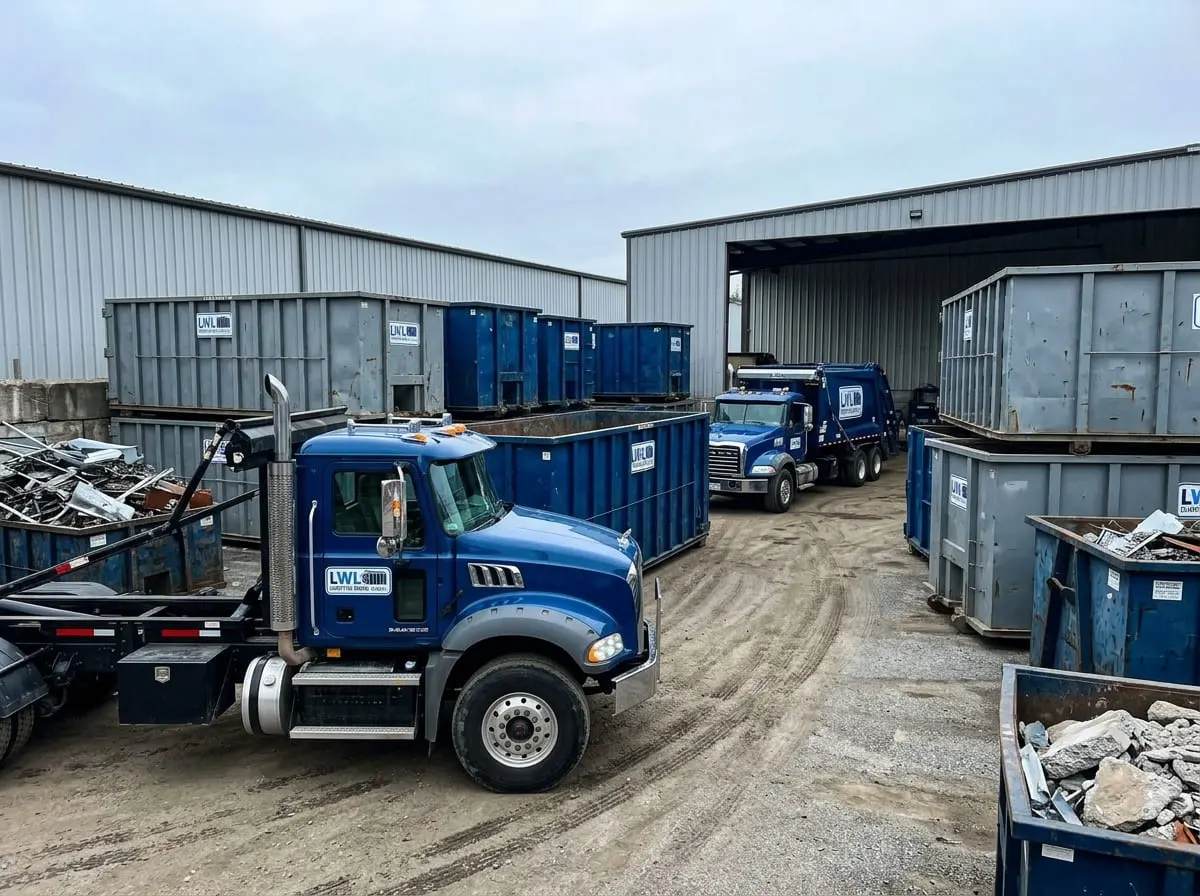
A roll-off dumpster flips the labor equation. We drop a container at your address — driveway, curb apron, or job site — and it's yours for the rental period, typically several days to a week or more depending on the size you book. You fill it on your own schedule: a few bags after work Monday, a truckload of debris Saturday morning, whatever pace the project actually moves at. When you're done, or the rental window closes, we haul it away and handle disposal.
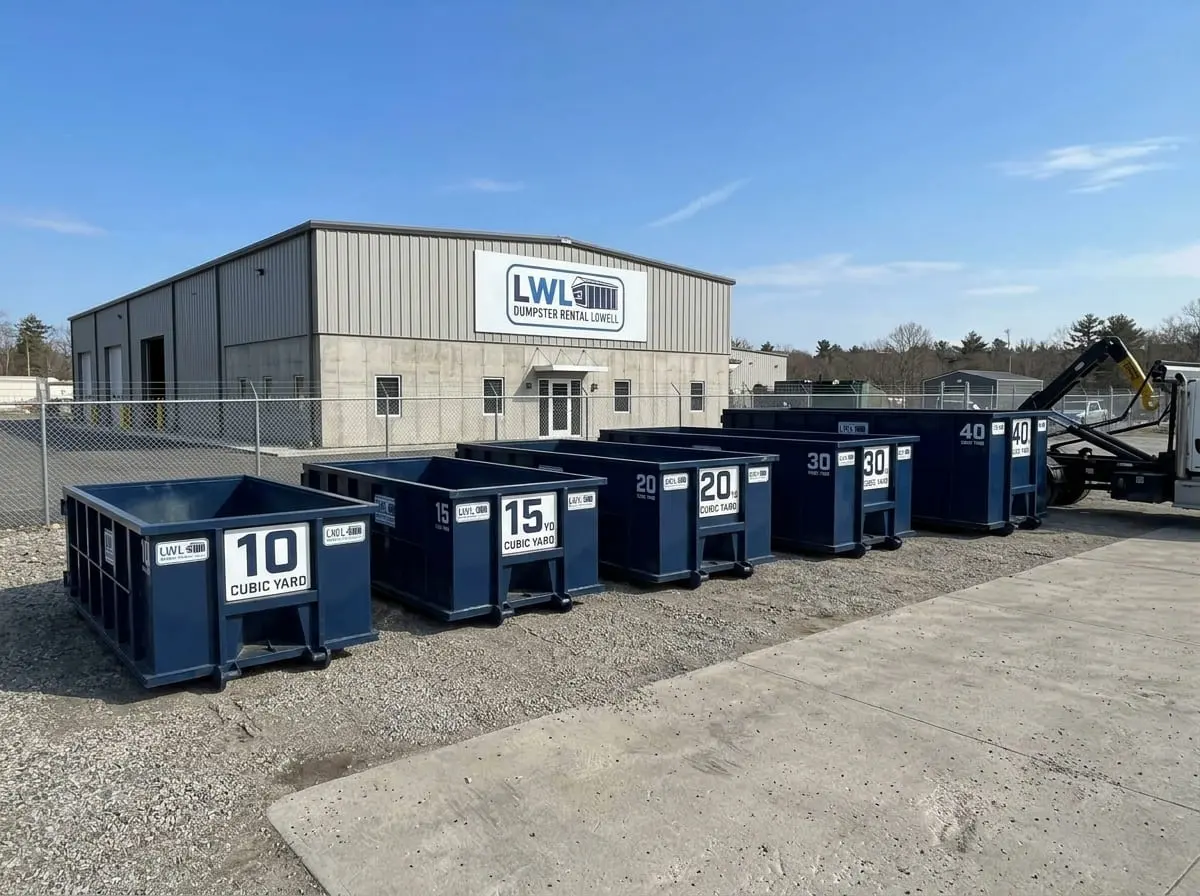
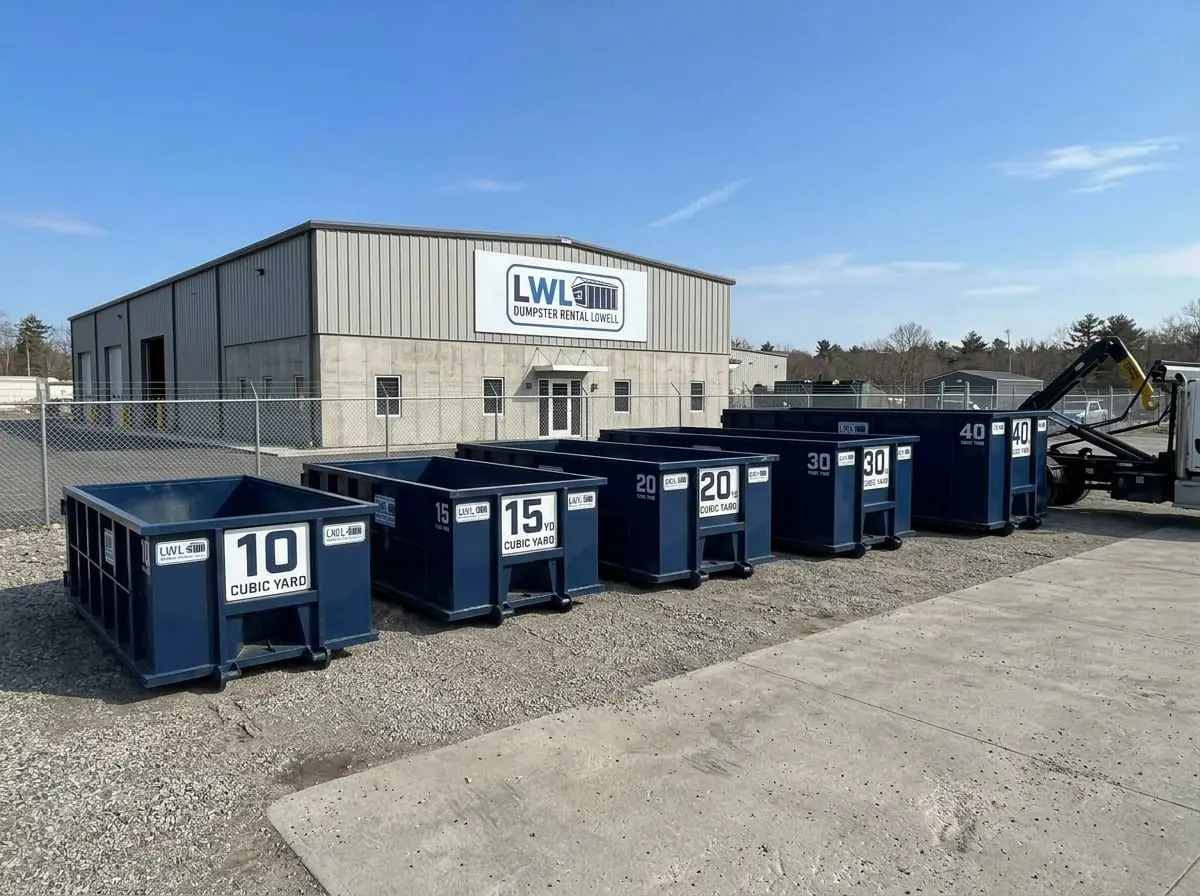
The tradeoff is obvious and worth saying plainly: you, or your crew, do the lifting. Nobody's carrying a torn-out vanity down your stairs for you. What you get in exchange is volume, flexibility and a much lower cost per pound of debris for anything beyond a small load — plus the ability to keep working over multiple days instead of coordinating one single visit. If you're not sure how big a container the job needs, our dumpster size guide walks through it, and the size lineup shows what's available from 10 to 40 yards.
Neither option is objectively cheaper — it depends entirely on volume and how much labor you're willing to supply. Here's the honest breakdown for a typical Greater Lowell job:
| Factor | Junk Removal | Dumpster Rental |
|---|---|---|
| Who does the lifting | The crew — you point, they carry | You or your own crew, at your own pace |
| Timeline | Usually done in one visit, same day | Container stays on-site for days, sometimes longer |
| Best cost fit | Small to medium loads, single items | Large volume, multi-day or multi-room jobs |
| Scheduling flexibility | Fixed appointment window | Fill whenever, on your own hours |
| Physical effort required | None — you don't touch it | Full — someone has to load it |
| Good for renovation debris | Limited — better suited to finished items, not demo debris | Yes — built for construction and demo loads |
| Street permit consideration | Not applicable — no container placed | May apply for street or right-of-way placement in some Lowell neighborhoods |
A rough rule of thumb: if what you're clearing out would fit in the back of a pickup truck, junk removal usually wins on convenience and total cost. Once you're past that — a full room, a garage, a renovation's worth of debris — a dumpster starts winning on cost per load, because you're not paying for repeat labor-included visits to move the same volume in stages. Our Lowell dumpster pricing guide breaks down what actually drives the number on the rental side.
An old sofa, a dead washing machine, a mattress that needs replacing, a recliner nobody wants — this is the textbook junk removal call. Renting a dumpster for one couch means paying for a container, a delivery, a pickup and a rental period to move one thing that a two-person crew can carry out in under ten minutes. There's no volume to justify the container, and you'd still have to move the item yourself to the curb before anyone hauled it. For a single bulky item or a short list of a handful of things, junk removal is faster, simpler and almost always cheaper than the dumpster route.
One local wrinkle worth knowing: Massachusetts banned mattresses, box springs and textiles from regular waste disposal statewide as of November 2022. That doesn't change which service you book — it just means whoever handles the item, whether it's a junk removal crew or your own dumpster load, needs to route it to the right disposal stream rather than the general waste pile. We handle that as a normal part of a junk removal pickup, so it's one less thing for you to research.
A full estate cleanout, a gut renovation of a mill-era triple-decker, a hoarding situation, or clearing out a relative's house room by room over a week — these are dumpster jobs. The volume is too large and the timeline too spread out for a single labor-included visit to make sense. You need a container that sits on the property while you, family members, or a contracting crew work through it in stages: attic one day, basement the next, garage after that.
This is where the cost math flips hard in the dumpster's favor. A 20 or 30-yard container holds what would otherwise be several separate junk removal trips, and it lets the work happen on your schedule instead of coordinating multiple appointments around everyone's availability. If you're planning an estate cleanout specifically, our estate cleanout checklist covers how to sequence a job like this room by room, and our estate cleanout service page details how we support these longer projects when a straight rental alone isn't quite enough.
Most real projects don't fall neatly into "one item" or "whole house" — they land in the middle, and that's where the decision actually gets interesting.
Take the UMass Lowell student move-out crunch every May and August: a landlord clearing a two-bedroom unit near campus after tenants leave furniture, broken lamps and half-empty bins behind. That's usually too much for a single junk removal visit to feel efficient, but not always enough to justify a full 20-yard container sitting outside for a week. Landlords who handle this turnover regularly often lean toward a smaller dumpster they can fill over a couple of days between showings — our renter turnover cleanout guide walks through that specific calculation in more detail.
A garage cleanout is a similar story — a weekend project with real volume but no demo debris, where either option can work depending on whether you'd rather pay for labor or supply your own. A roofing tear-off or a mill-building renovation, on the other hand, tips clearly toward a dumpster: that debris is heavy, sharp and generated continuously throughout the job, which is exactly what roll-off containers are built for rather than a single labor-included pickup.
Both services have limits, and they're not identical. Junk removal crews can typically take furniture, appliances, electronics and general household items, but hazardous materials — paint, chemicals, propane tanks, certain batteries — usually need a separate disposal path either way. Dumpster rentals follow Massachusetts' broader waste ban rules, which restrict certain materials from landfill disposal altogether, including construction and demolition debris streams, mattresses and textiles, and other banned categories tracked by MassDEP's waste disposal ban list. Dumpsters also carry a weight allowance built into the rental — go meaningfully over it and an overage fee applies — while a junk removal quote is priced up front for exactly what the crew sees, so there's less risk of a surprise number after the fact.
If a decent amount of what you're clearing is still usable — furniture in good shape, working appliances, clean building materials — donating it first through an outlet like Habitat for Humanity ReStore can shrink whatever's left for either the crew or the container, and it keeps usable material out of the waste stream entirely rather than adding weight to a load headed for disposal.
If your dumpster is going on the street rather than a private driveway — common on tighter Downtown or Acre blocks where off-street parking is scarce — check whether your address needs a placement permit before delivery day. Our street placement and permit guide covers when that applies and how to sort it out ahead of time so delivery isn't held up on the day you need it most.
Boil it down to two questions. First: how much volume are you actually moving — a truckload, or a house? Second: are you willing to supply the labor in exchange for a lower cost per load, or would you rather pay for a crew and never touch it? A single item or a short list points to junk removal every time. A multi-day project, a renovation, or a full property clearing points to a dumpster. Anything in between — a move-out turnover, a garage, a mid-size cleanup — is worth a quick conversation, because the right answer usually comes down to your timeline more than your budget.
Not sure which side of that line your project falls on? Call LWL Dumpster Rental at (978) 848-1596 or reach out through our contact page and describe what you're clearing — we'll tell you straight whether a crew or a container makes more sense for your situation, and we won't upsell you into the wrong one.
Talk to a real person
Call and describe the job. Flat price, stated tonnage, and a delivery time on the same call.
Mon–Sat 7:00am – 7:00pm
From this guide
Not always — it depends on volume. For a single item or a small load, junk removal is usually cheaper overall because you're not paying for a multi-day rental you don't need. Once the volume grows to a full room or more, a dumpster's cost per load typically comes out ahead because you're not paying for labor on every trip.
Yes, and it's common. Some homeowners rent a dumpster for the bulk of a cleanout — construction debris, yard waste, general junk — and separately book a junk removal pickup for a heavy single item like an appliance or a piano that's easier to hand off to a crew. Call us and describe the job; we'll tell you honestly if splitting it makes sense.
Rental periods typically run several days to about a week, which covers most weekend and multi-day projects. If your job is going to stretch longer — a full estate cleanout or a renovation — let us know when you book and we can plan a longer window or a swap instead of rushing to fill it.
Junk removal never requires a permit since no container is placed. A dumpster placed on a private driveway usually doesn't either, but placement on the street or a shared right-of-way in tighter Lowell neighborhoods like Downtown or the Acre can require one. Check our street placement and permit guide before delivery day if you're unsure.
Hazardous materials — paint, solvents, propane tanks, certain batteries and chemicals — generally fall outside both junk removal and standard dumpster loads and need a separate disposal path. Massachusetts also bans mattresses, box springs and textiles from regular waste disposal, so those items get routed differently rather than tossed in with everything else; we handle that routing as part of a normal pickup.
Keep reading
A walk through five representative Lowell-area projects, one for each dumpster size, showing why each size fit and what actually filled the container.
ReadA practical Lowell, MA guide to choosing the right dumpster size, from a 10-yard garage cleanout to a 40-yard new-construction job, including weight limits and real local project examples.
ReadDumpster rental pricing in Lowell isn't one number — it's a formula built from size, weight, rental length, permits and prohibited-item rules, and knowing the formula is how you spot a fair flat-rate quote.
Read